Research / Note 02
Preference Has a History
- Category
- Temporal Models
- Published
- Reading time
- 12 min
- Author
- Stéphane Benayoun, Co-founder and Chief Technology Officer
Abstract
A preference signal does not arrive without a past. It occurs at a particular moment, within a sequence of other observations, and its interpretation can change as new evidence accumulates.
Research in temporal and sequential user modelling has repeatedly shown that order, recency and elapsed time can matter to prediction. It has also shown why there is no universal rule for deciding how quickly old evidence should be forgotten. Some patterns persist; others change rapidly; and recent activity does not necessarily make earlier observations irrelevant.
For models intended to reason about a person over time, this creates a deeper representational question. A current estimate of preference may be useful, but it is not necessarily equivalent to the history that produced it.
Every preference has provenance.
A person may have chosen the same kind of object repeatedly five years ago and shown little interest in it since. What should a model conclude today?
The earlier observations may describe a preference that has disappeared. They may reflect something persistent that has simply had few opportunities to reappear. They may belong to a particular period or circumstance. A later contradiction may indicate a genuine change, or it may be an isolated exception.
The observations themselves have not become false. What changes is the set of interpretations that remain plausible.
This distinction is important because computational systems generally encounter taste indirectly. They observe actions, ratings, selections, rejections, searches or other traces from which preference has to be inferred. An observation that appears to express preference is therefore evidence, not a timeless description of the person.
Once preference is understood in this way, time becomes more than a timestamp attached to an otherwise static representation. The history surrounding an observation can affect what that observation reasonably allows a system to infer.
Established research
Temporal structure carries information
Recommender systems provide one of the richest technical literatures on temporal preference evidence because they have had to model large behavioural histories in which both users and available items change over time. Their usual objective is predictive rather than psychological: accurately predicting an interaction does not amount to explaining a person’s taste. Even so, the field offers useful evidence about what can be lost when temporal structure is removed.
Traditional collaborative-filtering formulations often reduce interaction data to relationships between users and items. In such representations, two people with similar collections of interactions may appear similar even if those interactions occurred in very different orders.
Sequence-aware recommendation explicitly addresses this limitation. Quadrana, Cremonesi and Jannach describe a class of systems in which the sequence of previous interactions contributes to the user model, allowing recent or ordered behaviour to influence what is predicted next. Their survey reflects a broader recognition that the same set of interactions can contain different information when its ordering changes.
Later work has explored time at finer resolution. Li, Wang and McAuley’s TiSASRec, for example, incorporates the intervals between interactions rather than representing a history solely through its position in a sequence. The distinction is meaningful: two consecutive actions separated by minutes need not carry the same temporal relationship as two consecutive actions separated by several months.
Other methods represent users and items as entities whose computational states evolve through interaction. JODIE, developed by Kumar, Zhang and Leskovec, learns dynamic embeddings that change over time while retaining separate static components. This is one modelling approach rather than a general theory of human preference, but it demonstrates a useful technical principle: modelling a user does not require assuming that the relevant representation is identical at every point in time.
Taken together, this literature supports a limited but important conclusion. Temporal information can contribute predictive signal that a static collection of interactions does not preserve.
What it does not establish is that any particular temporal representation corresponds to the psychological structure of taste. That is a separate question.
Recency is useful, but it is not equivalent to relevance
One of the simplest ways to introduce time into a preference model is to give recent observations more influence than older ones.
There are settings in which this works well. Ding and Li’s early work on time-weighted collaborative filtering, for example, explored explicit decay functions motivated by the assumption that recent ratings could better represent a user’s current interests.
The intuitive appeal is clear. If a person’s preferences are changing, old behaviour can pull a model towards a state that no longer describes them accurately.
Yet the empirical literature does not support a universal rule in which relevance declines monotonically with age.
Koren’s work on temporal collaborative filtering for the Netflix Prize is particularly informative here. Rather than treating temporal change as uniform decay, the model separates several effects operating at different timescales, including gradual changes and shorter-lived variations in user behaviour. Experiments with simple exponential decay did not show that aggressively discounting older ratings was beneficial; older interactions continued to carry useful information.
This should be interpreted carefully. The result does not prove that an old preference remains psychologically important simply because it improves a recommendation model. Collaborative filtering can extract information from historical interactions for several statistical reasons.
It nevertheless undermines a simpler assumption: the age of behavioural evidence, by itself, does not determine its usefulness.
A broader survey by Campos, Díez and Cantador reaches a similarly cautious conclusion about time-aware recommendation. Results differ substantially across datasets, algorithms and experimental designs, and the authors show that evaluation protocols themselves can affect conclusions about the benefits of temporal modelling.
The relevant lesson is therefore not that old evidence should always be preserved, nor that recent evidence should always dominate. It is that there is no obvious general-purpose forgetting rule.
Preference can exhibit several timescales
Temporal models have repeatedly distinguished between relatively persistent patterns and shorter-term activity. Xiang and colleagues, for example, proposed combining long- and short-term preference components rather than forcing behaviour into a single temporal scale.
This decomposition is computational, and it should not automatically be interpreted as a psychological taxonomy. Still, it addresses a real modelling problem. Behaviour that is highly predictive within the current session or period may be less representative of a person’s longer history, while a persistent tendency may remain useful despite being temporarily absent from recent activity.
Research on aesthetic preference also provides reasons to be cautious about treating individual observations as stable characteristics. Pugach, Leder and Graham found that participants did not reproduce aesthetic rankings perfectly when they repeated preference tasks after a short interval. The study does not establish long-term preference drift, and its results should not be generalized beyond its experimental setting. It does show, however, that even an explicitly elicited aesthetic judgment should not automatically be treated as an immutable property of the individual.
The harder modelling problem is therefore not simply whether preferences are stable or unstable. Both can occur, potentially at different timescales.
The relevant question becomes: which aspects of the evidence support persistence, and which support change?
Interpretation
A current state and its history are not the same object
Most practical systems eventually need some representation of the present. They must decide what appears relevant now, what should be retrieved, or what should influence the next action.
There is nothing inherently inadequate about compressing previous observations into a current computational state. Indeed, almost every useful model performs some form of compression.
The representational question is what must remain recoverable after that compression.
Consider two histories.
In the first, a person repeatedly expresses preference for a particular characteristic for several years and then gradually moves away from it. In the second, the person alternates between attraction and rejection throughout the same period.
A model concerned only with the aggregate balance of positive and negative evidence could potentially produce similar current estimates for both cases. Their histories, however, support different interpretations. One resembles transition; the other suggests coexistence, instability, contextual dependence, or a distinction that the model has not yet captured.
The same applies to recurrence. A preference that appears, disappears for several years and then returns has a different history from one appearing for the first time, even if their present observations are identical.
This is why a current representation should not automatically be confused with the evidence from which it was inferred.
Questions such as these depend on temporal structure:
When did a pattern first appear?
Has it remained consistent?
Did it change gradually or abruptly?
Has the same change occurred before?
Did an earlier pattern later return?
Are apparently contradictory observations distributed across time, or concentrated around one period?
A representation does not necessarily need to store every historical event explicitly in order to answer such questions. It does, however, need to preserve enough information for distinctions that matter to remain recoverable.
Contradiction is not always something to average away
Contradictory evidence is particularly revealing.
Suppose a person repeatedly selected a certain kind of object in the past and now repeatedly rejects it. A system could resolve the inconsistency by giving more weight to recent observations. In some applications, that may be sufficient.
But the temporal pattern contains additional information.
Repeated acceptance followed by sustained rejection is different from alternating acceptance and rejection throughout the same period. A brief deviation followed by a return to the earlier pattern is different again. The observations may contain similar positive and negative evidence in aggregate while describing very different trajectories.
This does not mean the system can infer the true reason for those trajectories. A behavioural history rarely provides that certainty. Change can originate in the person, in their circumstances, in the available alternatives, in the meaning of the category itself, or in factors that were never observed.
The value of history is therefore not that it resolves ambiguity automatically. It can also reveal where ambiguity exists.
That is an important property for any model that represents a person over time. Uncertainty should not disappear merely because the system is required to produce a current estimate.
Forgetting is part of the modelling problem
A persistent model must forget some things.
Keeping every earlier inference at full strength would eventually make adaptation difficult. A person who has genuinely changed should not remain indefinitely defined by behaviour from years earlier.
But forgetting too aggressively creates the opposite problem. A representation dominated by the most recent observations can lose recurring patterns, long-term tendencies and evidence needed to recognize that the present state is unusual.
This is sometimes described as a tension between stability and plasticity: the ability to retain useful structure while remaining responsive to new information.
For preference modelling, there is an additional difficulty. Different kinds of evidence may plausibly deserve different temporal treatment.
A repeated pattern observed over many years is not equivalent to a burst of activity over a weekend. An explicit statement may behave differently from a single click. An absence of interaction does not necessarily demonstrate that a previous preference has disappeared. Even repeated contradictory behaviour may remain ambiguous when the circumstances surrounding it are unknown.
For this reason, forgetting cannot always be reduced to elapsed time.
The relevant unit is not simply how old an observation is, but what its history allows the system to infer about its continuing significance.
TasteGraph perspective
Every preference has provenance
At TasteGraph, we use the phrase every preference has provenance as a concise way to describe this representational requirement.
More precisely, every piece of preference evidence has provenance.
It was observed at a particular time. It arose through a particular kind of interaction. It occupies a position within a history of other evidence, and some information about its circumstances may or may not be available.
Provenance does not provide a complete causal explanation. Observing that someone made a choice does not reveal with certainty why they made it, and a computational model should not pretend otherwise.
What provenance provides is a constraint on interpretation.
A single recent observation should not necessarily overturn a repeatedly observed pattern. A long-standing preference should not necessarily survive sustained contradictory evidence. A period of unusual behaviour should not automatically be classified either as noise or as permanent change.
The history matters because each of these possibilities implies a different relationship between current evidence and previous evidence.
Persistence should preserve change rather than eliminate it
A system intended to reason about someone over a long period requires continuity. Without continuity, every interaction begins too close to zero.
Continuity, however, should not be confused with a fixed identity.
A useful persistent representation must remain revisable. It should be capable of retaining long-running patterns while recognizing that some of them have weakened, changed or disappeared. It should also allow temporary behaviour to exist without immediately redefining everything that came before it.
This distinction matters when discussing persistent personal AI more broadly. A representation can maintain a coherent history of a person without assuming that the person is static.
In our view, that is a more useful interpretation of persistence: not permanence of the inferred state, but continuity of the evidence and of the reasoning that connects past observations to the present.
Not every application needs a long history
The importance of provenance depends on the task.
A system optimizing a single anonymous session may need little more than the person’s immediate behaviour. A music system choosing the next track might reasonably privilege a short-term state. In such settings, maintaining a rich longitudinal representation could add complexity without meaningful benefit.
The argument becomes more consequential when a system is expected to understand and assist the same person across months or years.
As the observation window grows, assuming that the present can replace the past becomes increasingly strong. The model must decide which earlier evidence remains relevant, which has been superseded, which may reappear, and where contradictory observations should leave uncertainty rather than force an immediate conclusion.
These decisions can be implemented in many ways. Nothing in this argument requires an explicit chronological database, a particular graph structure, a recurrent network, a transformer, or any other specific architecture.
The requirement is functional rather than architectural.
If recurrence, persistence, transition and temporary deviation can matter to future reasoning, a useful representation must preserve enough of the evidence for those distinctions not to disappear prematurely.
Preference as trajectory
Representing taste over time does not require believing that every preference follows a clean trajectory.
Human behaviour is rarely that orderly.
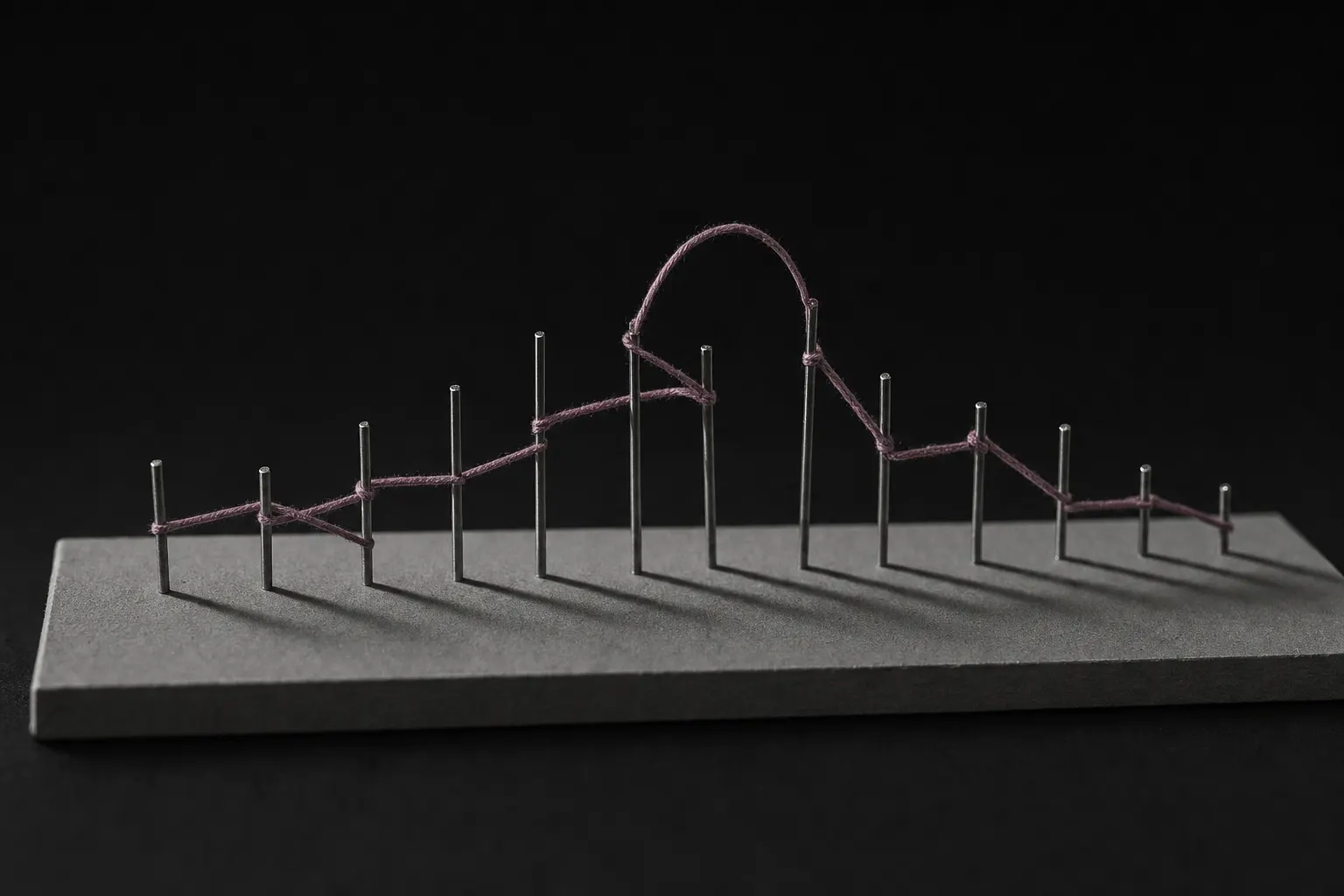
The idea of a trajectory is useful because it changes the object being modelled. Instead of asking only what preference best describes the person at the current instant, it allows the system to consider how the current state relates to previous states.
This introduces distinctions that a timeless profile tends to obscure.
A current preference may be newly emerging or long established. A contradiction may be anomalous or the beginning of a transition. An older tendency may have disappeared or become temporarily inactive. A return to something previously observed may carry information precisely because it is a return.
None of these interpretations should be asserted without evidence. The point is that a model capable of representing history can keep them available as different hypotheses.
That becomes increasingly important as AI systems persist.
A system that has interacted with someone for five minutes can reasonably treat the present as almost everything it knows about them. A system that has interacted with the same person for five years cannot make that assumption without discarding potentially important information.
The problem is not to preserve the past indefinitely. Nor is it to construct a permanent identity from every trace a person leaves behind.
It is to represent enough continuity to reason about change.
A preference signal observed five years ago may no longer describe what matters today. It may also be essential to recognizing what changed, what persisted, or what returned.
Its age does not settle the question.
Its history helps define it.
A useful model of taste must remember not only what it knows, but how it came to know it.
Selected references
[1] Quadrana, M., Cremonesi, P., & Jannach, D. (2018). Sequence-Aware Recommender Systems. ACM Computing Surveys, 51(4). 10.1145/3190616
[2] Li, J., Wang, Y., & McAuley, J. (2020). Time Interval Aware Self-Attention for Sequential Recommendation. Proceedings of the 13th ACM International Conference on Web Search and Data Mining (WSDM), 322–330. 10.1145/3336191.3371786
[3] Kumar, S., Zhang, X., & Leskovec, J. (2019). Predicting Dynamic Embedding Trajectory in Temporal Interaction Networks. Proceedings of the 25th ACM SIGKDD International Conference on Knowledge Discovery & Data Mining, 1269–1278. 10.1145/3292500.3330895
[4] Ding, Y., & Li, X. (2005). Time Weight Collaborative Filtering. Proceedings of the 14th ACM International Conference on Information and Knowledge Management (CIKM), 485–492. 10.1145/1099554.1099689
[5] Koren, Y. (2009). Collaborative Filtering with Temporal Dynamics. Proceedings of the 15th ACM SIGKDD International Conference on Knowledge Discovery and Data Mining, 447–456. 10.1145/1557019.1557072
[6] Campos, P. G., Díez, F., & Cantador, I. (2014). Time-aware recommender systems: a comprehensive survey and analysis of existing evaluation protocols. User Modeling and User-Adapted Interaction, 24, 67–119. 10.1007/s11257-012-9136-x
[7] Xiang, L., Yuan, Q., Zhao, S., Chen, L., Zhang, X., Yang, Q., & Sun, J. (2010). Temporal Recommendation on Graphs via Long- and Short-term Preference Fusion. Proceedings of the 16th ACM SIGKDD International Conference on Knowledge Discovery and Data Mining, 723–732. 10.1145/1835804.1835896
[8] Pugach, C., Leder, H., & Graham, D. J. (2017). How Stable Are Human Aesthetic Preferences Across the Lifespan? Frontiers in Human Neuroscience, 11, 289. 10.3389/fnhum.2017.00289